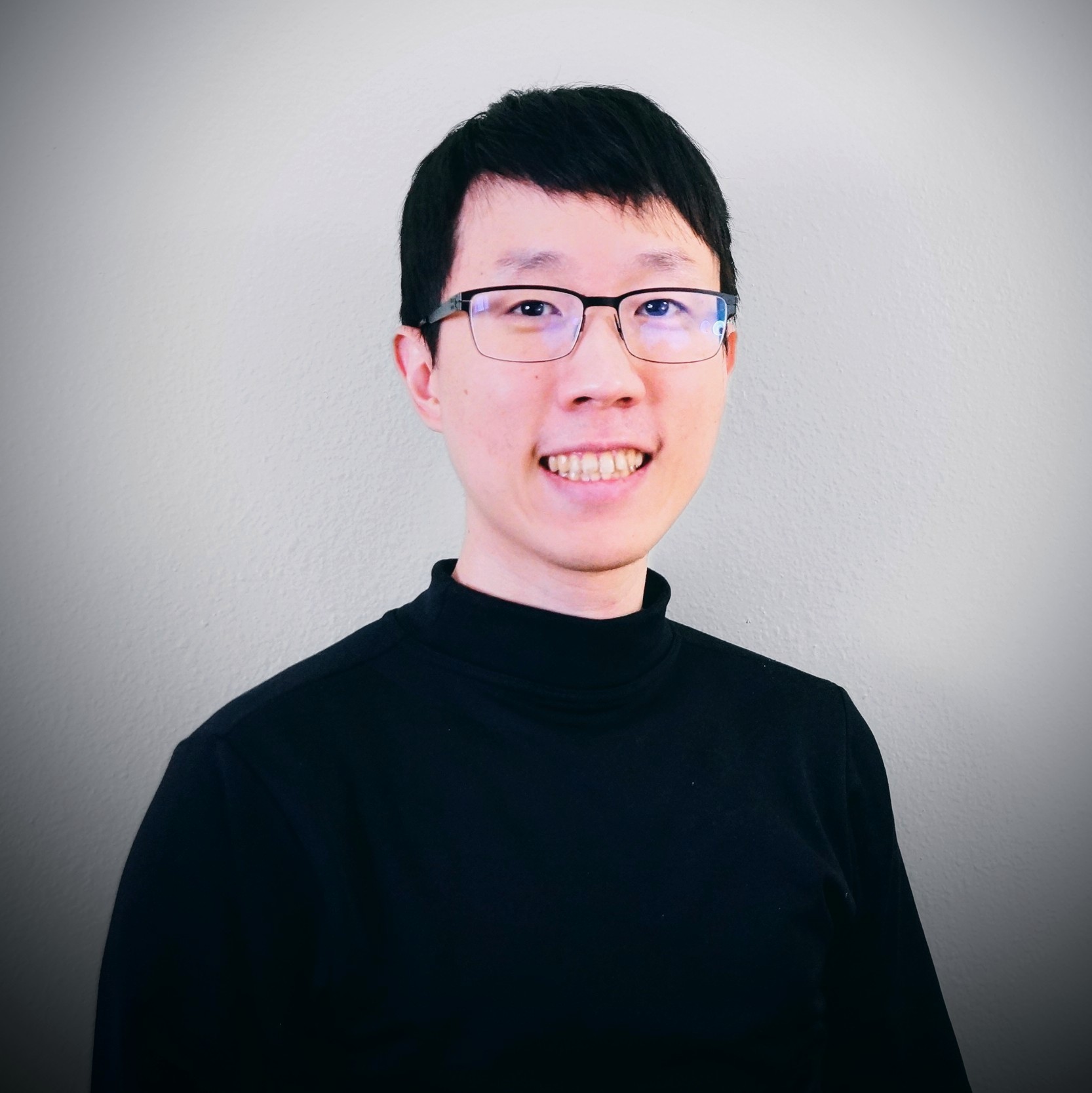
Hsin-Ying Lee
Hsin-Ying Lee

Building AI-native tools for designing the physical world.

CTO at illoca, where we are building Plamo—an AI-native 3D modeling tool that turns sketches, photos, and text into fully editable parametric models—and Tracing Paper for architectural design.

My work bridges generative AI, 3D/4D visual computing, and tools for spatial design. Previously, I led the 3D/4D generation team on the Creative Vision team at Snap Research. I received my PhD from UC Merced, advised by Prof. Ming-Hsuan Yang.

hsinyinglee [at] illoca.com
Current Work

Building AI-native design tools at illoca

illoca is building AI-native tools for 2D drafting and 3D modeling. Our products keep AI output editable so designers can move from intent to structured design data.

Private preview · Launching August 18

Plamo

Turn sketches, photos, or text into fully editable, parametric 3D models. Spend less time manually modeling and more time designing.

  • Cross-disciplinary
  • Fully parametric
  • Browser native
  • Editable export

Published reels

Plamo project previews

Architectural design

Tracing Paper

illoca is creating an intelligent canvas for architectural design: a way for architects to stay close to sketches, markups, references, and language while producing editable 2D and 3D design data.

The product direction is simple: keep the creative act lightweight, make the AI outputs editable, and let designers move fluidly between early concepts and structured architectural representations.


App demos

Prompted plans
Adaptive massing
Instant facades
Agentic refinement

News


  • 08/2026: Plamo launches August 18, bringing editable parametric 3D modeling to sketches, photos, and text.
  • 05/2026: illoca came out of stealth mode with Tracing Paper for AI-native architectural design.
  • 02/2025: Three papers are accepted to CVPR 2025 (1 highlight)
  • 01/2025: Joined illoca as CTO and founding member.
  • 01/2025: Four papers are accepted to ICLR 2025
  • 09/2024: One paper is accepted to NeurIPS 2024
  • 05/2024: One paper is accepted to ECCV 2024
  • 02/2024: Four papers are accepted to CVPR 2024 (1 spotlight)
Older news archive
  • 12/2023: One paper is accepted to ICLR 2024
  • 09/2023: One paper is accepted to SIGGRAPH Asia 2023
  • 07/2023: Two papers are accepted to ICCV 2023
  • 04/2023: One paper is accepted to ICML 2023
  • 02/2023: Five papers are accepted to CVPR 2023 (1 highlight)
  • 01/2023: One paper is accepted to ICLR 2023 (oral)
  • 07/2022: Three papers are accepted to ECCV 2022
  • 12/2021: Two papers are accepted to CVPR 2022
  • 12/2021: One paper is accepted to ICLR 2022
  • 07/2020: Joining Snap Research!
  • 07/2020: Four papers are accepted to ECCV 2020 (1 spotlight)
  • 12/2019: One paper is accepted to ICLR 2020 (spotlight)
  • 12/2019: One paper is accepted to IJCV 2019
  • 09/2019: One paper is accepted to NeurIPS 2019
  • 05/2019: Google Internship, MTV
  • 04/2019: One paper is accepted to ICIP 2019
  • 02/2019: One paper is accepted to CVPR 2019
  • 12/2018: Google Internship, SNV
  • 07/2018: Two papers are accepted to ECCV 2018 (1 oral)
  • 05/2018: Nvidia Internship, Santa Clara Audio-Visual Modeling
  • 07/2017: One paper is accepted to ICCV 2017
  • 05/2017: Google Internship, MTV Video Highlights / Video Summarization
  • 08/2016: Started my PhD at UC Merced

Publications


Education


University of California, Merced
Ph.D. in EECS, University of California, Merced, California, USA
Sep. 2016 - May. 2020
University of Southern California
M.S. in Electrical Engineering, University of Southern California, Los Angeles, California, USA
Sep. 2015 - Aug. 2016
National Taiwan University
B.S. in Electrical Engineering, National Taiwan University, Taipei, Taiwan
Sep. 2010 - Jun. 2014